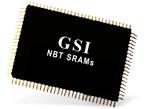

GS8162Z72CC-250IV

GSI Technology
464-GS8162Z72CC250IV
GS8162Z72CC-250IV

Mfr.:

Description:
SRAM 1.8/2.5V 256K x 72 18M

ECAD Model:
Download the free Library Loader to convert this file for your ECAD Tool. Learn more about the ECAD Model.

In Stock: 90

Stock:
90 Can Dispatch Immediately
Factory Lead Time:
12 Weeks Estimated factory production time for quantities greater than shown.
Minimum: 1   Multiples: 1
Unit Price:
-,-- €
Ext. Price:
-,-- €
Est. Tariff:
This Product Ships FREE

Pricing (EUR)

Qty. Unit Price
Ext. Price
94,12 € 94,12 €
86,79 € 867,90 €
83,93 € 1 762,53 €
81,79 € 3 435,18 €
78,45 € 8 237,25 €
252 Quote

Product Attribute Attribute Value Select Attribute
GSI Technology
Product Category: SRAM
SMD/SMT
BGA-209
- 40 C
+ 85 C
GS8162Z72CC
Tray
Access Time: 5.5 ns
Brand: GSI Technology
Country of Assembly: Not Available
Country of Diffusion: Not Available
Country of Origin: TW
Interface Type: Parallel
Maximum Clock Frequency: 250 MHz
Memory Size: 18 Mbit
Memory Type: SDR
Moisture Sensitive: Yes
Organisation: 256 k x 72
Product Type: SRAM
Factory Pack Quantity: 21
Subcategory: Memory & Data Storage
Supply Current - Max: 275 mA, 360 mA
Supply Voltage - Max: 2.7 V
Supply Voltage - Min: 1.7 V
Tradename: NBT SRAM
Type: NBT
Products found:
To show similar products, select at least one checkbox
Select at least one checkbox above to show similar products in this category.
Attributes selected: 0

This functionality requires JavaScript to be enabled.

TARIC:
8542324500
CNHTS:
8542329010
CAHTS:
8542320030
USHTS:
8542320041
JPHTS:
854232029
KRHTS:
8542321020
MXHTS:
8542320299
ECCN:
3A991.b.2.b

NBT SRAMs

GSI Technology NBT SRAMs are 144Mbit and 288Mbit Synchronous Static SRAMs that utilize all available bus bandwidth. The SRAMs achieve this by eliminating the need to insert deselect cycles when the device is switched from read to write cycles. The devices' simplified interface is designed to use a data bus's maximum bandwidth. Because it is a synchronous device, address, data inputs, and read/write control inputs are captured on the rising edge of the input clock.