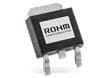

SCS206AGC17

ROHM Semiconductor
755-SCS206AGC17
SCS206AGC17

Mfr.:

Description:
SiC Schottky Diodes SiC Schottky Barrier Diode, 650V, 6A, 2nd Gen

Lifecycle:
NRND:
Not recommended for new designs.
ECAD Model:
Download the free Library Loader to convert this file for your ECAD Tool. Learn more about the ECAD Model.

Availability

Stock:
Not Available

Pricing (EUR)

Product Attribute Attribute Value Select Attribute
ROHM Semiconductor
Product Category: SiC Schottky Diodes
RoHS:  
Through Hole
TO-220ACG-2
Single
6 A
650 V
1.55 V
23 A
120 uA
+ 175 C
Tube
Brand: ROHM Semiconductor
Pd - Power Dissipation: 51 W
Product Type: SiC Schottky Diodes
Factory Pack Quantity: 1000
Subcategory: Diodes & Rectifiers
Vr - Reverse Voltage: 650 V
Part # Aliases: SCS206AG
Products found:
To show similar products, select at least one checkbox
Select at least one checkbox above to show similar products in this category.
Attributes selected: 0

This functionality requires JavaScript to be enabled.

TARIC:
8541100000
USHTS:
8541100080
ECCN:
EAR99

TO-220ACG SiC Schottky Barrier Diodes

ROHM Semiconductor TO-220ACG Silicon Carbide (SiC) Schottky Barrier Diodes (SBD) feature a reverse voltage range of 650V to 1200V and a continuous reverse current range of 1.2µA to 20.0µA. SiC technology enables these devices to maintain a low capacitive charge (QC), reducing switching loss while enabling high-speed switching operation. In addition, unlike Si-based fast-recovery diodes, where the reverse recovery time increases along with temperature, SiC devices maintain constant characteristics, resulting in better performance.

Silicon Carbide (SiC) Power Devices

ROHM Semiconductor SiC Power Devices deliver 10x the dielectric breakdown field strength, 3x the bandgap, and 3x the thermal conductivity of conventional silicon solutions. This translates to lower switching loss, lower ON resistance, and support for high-temperature operation, making it possible to minimize power loss along with module size. ROHM SiC Power Devices also allow designers to use fewer components, further reducing design complexity.